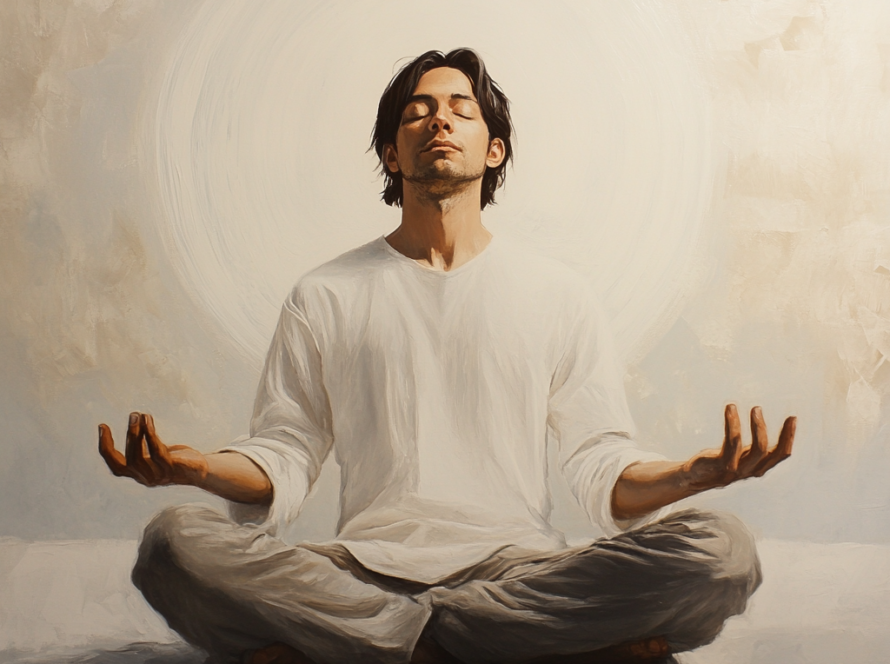
Transcendental Meditation (TM) is one of the most widely practiced and scientifically studied forms of meditation in the world. Unlike mindfulness meditation, which involves actively observing thoughts and sensations, TM uses a silent, personalized mantra to effortlessly transcend ordinary thinking and access a profound state of restful alertness.
In this comprehensive guide, you will learn exactly what Transcendental Meditation is, how it differs from other techniques, what the research shows, and how to decide if it is the right practice for you.
What Is Transcendental Meditation?
Transcendental Meditation was introduced to the Western world by Maharishi Mahesh Yogi in the 1950s and gained global attention when The Beatles famously studied with him in India in 1968. Since then, over 10 million people worldwide have learned TM, making it one of the most extensively researched wellness practices in existence.
The technique involves sitting comfortably with eyes closed for 20 minutes twice daily and silently repeating a specific mantra — a Sanskrit sound — assigned by a certified TM teacher. Unlike concentration practices, TM requires no effort to focus or control the mind. The mantra serves as a vehicle that allows the mind to naturally settle into quieter levels of thought until it transcends thinking altogether.
Transcendental Meditation vs. Mindfulness: Key Differences
Many people wonder how Transcendental Meditation compares to mindfulness meditation. Here are the core distinctions:
Technique
Mindfulness meditation involves actively directing and sustaining attention — to the breath, body sensations, or present-moment experience. TM is effortless: you simply introduce the mantra and allow the mind to settle naturally without any attempt to control or focus it.
Goal State
Mindfulness aims to cultivate present-moment awareness while remaining fully awake and alert. TM aims to transcend the thinking mind entirely, entering a fourth state of consciousness — pure awareness or “transcendence” — distinct from waking, dreaming, and deep sleep.
Learning
Mindfulness can be learned from books, apps, or online courses. TM traditionally requires learning from a certified teacher who assigns a personal mantra and provides ongoing support — this comes with a significant course fee (typically $300–$1,500 depending on country and income).
The Science-Backed Benefits of Transcendental Meditation
Over 600 peer-reviewed studies on TM have been published in scientific journals. The evidence is particularly strong in several areas:
Cardiovascular Health
The American Heart Association has recognized TM as the meditation technique with the strongest evidence for reducing blood pressure. A 2012 study published in Circulation: Cardiovascular Quality and Outcomes found that TM reduced the risk of heart attack, stroke, and death by 48% in patients with coronary heart disease compared to a control health education group.
Stress and Anxiety Reduction
A meta-analysis of 16 studies found TM significantly more effective than other relaxation techniques in reducing trait anxiety. EEG studies show that TM produces distinctive brainwave patterns — increased alpha coherence — associated with deep relaxation combined with heightened inner wakefulness.
Brain Development and Cognitive Performance
Research shows TM practitioners develop stronger connectivity between the prefrontal cortex and other brain regions, supporting improved executive function, creativity, and decision-making. Studies at universities including Harvard and UCLA have documented these neurological changes in long-term practitioners.
PTSD and Trauma Recovery
TM has shown remarkable results in veterans with PTSD. A randomized controlled trial published in the Military Medicine journal found that 61% of veterans who practiced TM for 3 months no longer met the clinical threshold for PTSD diagnosis, compared to 32% in a control group.
How Transcendental Meditation Is Taught
Learning TM follows a structured four-day course with a certified instructor:
- Day 1: Personal one-on-one instruction — you receive your mantra and learn the basic technique
- Day 2: Verification and refinement of your practice, understanding of the mechanics
- Day 3: Understanding the subtleties of effortlessness and the range of experience
- Day 4: Long-term practice principles and integration into daily life
After completing the course, practitioners typically meditate twice daily for 20 minutes each — once in the morning before breakfast and once in the afternoon. This schedule is designed to provide maximum benefit while fitting into a normal working day.
Is Transcendental Meditation Right for You?
TM may be an excellent choice if you:
- Want a simple, effortless technique that does not require concentration or mental effort
- Are specifically looking to reduce blood pressure or cardiovascular risk
- Have tried mindfulness and found it too effortful or frustrating
- Are willing to invest in formal training from a certified teacher
- Want access to one of the most extensively researched meditation traditions
TM may not be the best fit if budget is a significant concern, or if you prefer a technique you can learn independently through books and apps.
Frequently Asked Questions About TM
Can I learn TM on my own?
The TM organization strongly recommends learning from a certified teacher, as the personal mantra and its correct use are considered essential to the technique’s effectiveness. While mantra-based meditation can be practiced independently, it is technically distinct from official Transcendental Meditation.
Is TM religious?
TM is taught as a secular technique compatible with any religious background or no religion at all. Its roots are in the Vedic tradition of India, but its practice involves no belief system, rituals, or philosophical commitments.
Conclusion
Transcendental Meditation stands out from the crowded meditation landscape through its effortless technique, distinctive physiological effects, and exceptional research foundation. Whether or not you ultimately choose to learn TM formally, understanding its principles can enrich any meditation practice.
At Pacis-path, we believe that the best meditation technique is the one you will actually practice consistently. Explore our resources across all major traditions to find the approach that resonates most deeply with you.