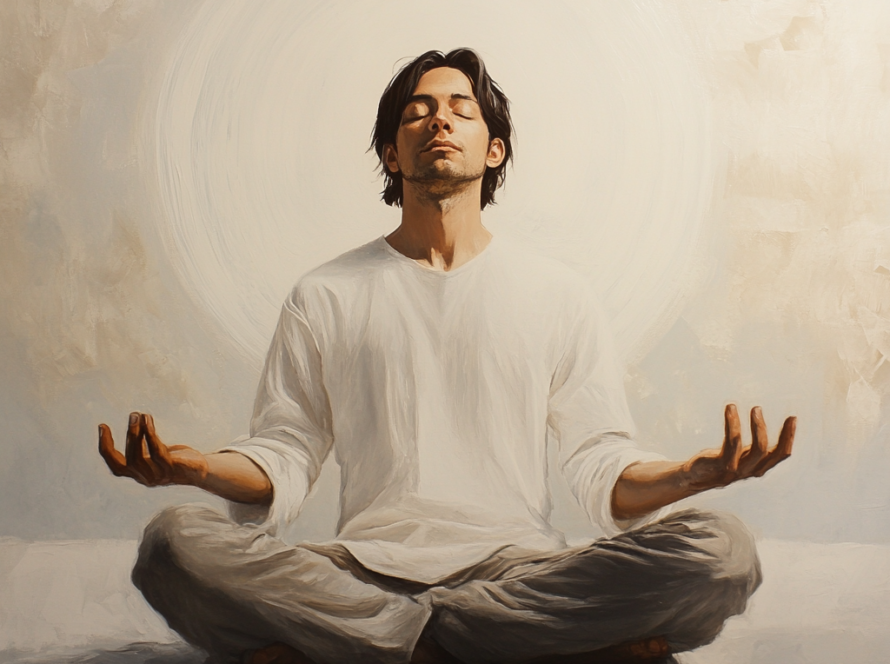
Meditation for better sleep is one of the most powerful and widely researched natural solutions for insomnia and poor sleep quality. Unlike sleeping pills — which carry side effects, dependency risks, and lose effectiveness over time — meditation addresses the root causes of sleeplessness: an overactive, anxious mind and a stressed, tension-holding body.
In this comprehensive guide, you will discover exactly why meditation works for sleep, five highly effective techniques you can use tonight, and how to build an evening routine that makes deep, restorative sleep a natural outcome.
Why Can’t You Sleep? Understanding the Stress-Sleep Connection
The most common cause of insomnia is a mind that will not stop racing when your head hits the pillow. You replay conversations from the day, worry about tomorrow’s challenges, or get trapped in loops of “what if” thinking. Underlying this is the stress response — elevated cortisol keeping your nervous system on high alert when it should be winding down.
Meditation for sleep works by directly targeting this physiological response. It activates the parasympathetic nervous system — the body’s “rest and digest” mode — which lowers cortisol, slows heart rate, reduces blood pressure, and creates the internal conditions necessary for sleep to arise naturally.
What the Research Says About Meditation and Sleep
The scientific evidence supporting meditation for better sleep is compelling. A landmark study published in JAMA Internal Medicine found that participants who completed a mindfulness meditation program experienced significantly greater improvements in sleep quality, insomnia symptoms, daytime fatigue, and depression compared to those who took a sleep hygiene education course.
Brain imaging research shows that consistent meditators exhibit increased slow-wave sleep — the most restorative phase of the sleep cycle — and reduced activity in the default mode network (the brain’s “rumination center”) at bedtime.
5 Best Meditation Techniques for Sleep
1. Progressive Muscle Relaxation (PMR)
Lying in bed, systematically tense and release each muscle group from feet to face. Tense each area firmly for five seconds — feet, calves, thighs, abdomen, chest, hands, arms, shoulders, face — then release completely, noticing the contrast between tension and relaxation. By the time you reach your face, your body will be profoundly relaxed, signaling to your nervous system that it is safe to sleep.
2. The 4-7-8 Breathing Method
This simple but remarkably effective breathing technique is often called a “natural tranquilizer for the nervous system.” Inhale quietly through your nose for 4 counts. Hold your breath for 7 counts. Exhale completely through your mouth for 8 counts. The extended exhale activates the vagus nerve and triggers a powerful relaxation response. Most people find themselves drowsy after three to four cycles.
3. Body Scan Meditation for Sleep
The body scan is perhaps the most widely used meditation for sleep. Starting at the top of your head, slowly move your attention downward through your body, spending 20–30 seconds at each region: scalp, face, neck, shoulders, chest, arms, hands, abdomen, lower back, hips, thighs, knees, calves, feet. Simply notice sensations without trying to change them. This shifts awareness out of the conceptual, thinking mind and into the body — a transition that naturally facilitates sleep.
4. Guided Sleep Visualization
Guided visualizations engage the imagination to draw attention away from anxious thoughts and toward peaceful imagery. Picture yourself in a place of perfect safety and tranquility — a secluded beach at dusk, a quiet forest clearing, a cozy mountain cabin with a fire crackling. Build the scene with vivid sensory detail: the quality of the light, the sounds, the temperature, the scents. The more immersive the visualization, the more effectively it occupies the mind’s attention and allows sleep to come.
5. Yoga Nidra (Yogic Sleep)
Yoga Nidra is a powerful guided meditation practice designed to bring you to the hypnagogic state — the threshold between waking and sleeping. Traditionally practiced lying down, it guides awareness through the body, breath, sensations, emotions, and visualizations in a specific sequence. A single 30-minute Yoga Nidra session is said by practitioners to be as restorative as several hours of ordinary sleep. It is particularly beneficial for those with chronic insomnia or anxiety-related sleep disturbances.
Building Your Evening Wind-Down Routine
For maximum effectiveness, incorporate your sleep meditation practice into a consistent pre-sleep routine:
- 90 minutes before bed: Dim the lights and avoid blue-light screens (phone, TV, laptop) — blue light suppresses melatonin production by up to 50%
- 60 minutes before bed: Engage in a calm activity — light reading, herbal tea, a warm bath
- 30 minutes before bed: Begin your chosen meditation practice (body scan, 4-7-8 breathing, or visualization)
- At sleep onset: If mind is still active, do a simple counting meditation: breathe in, breathe out, count “one.” Repeat to ten, then start again.
Frequently Asked Questions: Meditation for Better Sleep
Can meditation replace sleep medication?
Meditation should not be used to replace prescribed medication without consulting your doctor. However, it can be a powerful complement to treatment — and for many people with mild to moderate insomnia, consistent meditation practice has allowed them to reduce or eliminate their reliance on sleep aids under medical guidance.
How soon will I see sleep improvements?
Many people notice improvements within the first two to three weeks of nightly practice. Full benefits typically emerge after four to eight weeks of consistent use, aligning with the neuroplastic changes in the brain’s stress-regulation systems.
What if I fall asleep during meditation?
For sleep meditation specifically, falling asleep during the practice is the goal! Unlike daytime meditation where maintaining awareness is the objective, evening sleep meditation is specifically designed to guide you naturally across the threshold into sleep.
Reclaim Your Sleep Naturally with Meditation
Meditation for better sleep is not a quick fix — it is a fundamental shift in how you prepare your body and mind for rest. With consistent nightly practice, you can transform your relationship with sleep from one of struggle and frustration to one of ease and restoration.
At Pacis-path, we are dedicated to helping you find natural pathways to deeper wellness — including the profound restorative power of quality sleep. Explore our full library of meditation guides and resources to support your journey to better rest.